
May 30, 2020 An octave above 100Hz is 200Hz. But an octave above 1kHz is 2kHz. In the first case one octave is 100Hz, but in the second case one octave is 1,000Hz. That’s ten times larger! A 100Hz difference in the low end is HUGE. But 100Hz in the top end is nothing. 100Hz and 200Hz sound very different. But 1kHz (1,000Hz) and 1.1kHz (1,100Hz) sound very. GNU Octave A high-level interactive language for numerical computations Edition 6 for Octave version 6.2.0 February 2021 Free Your Numbers John W. Created Date: 6/12/2009 10:49:32 AM.
|
Octave Cheat Sheet Download
Concert Pitch and TranspositionHEY!!! What's this Concert Bb or Concert C major scale stuff, anyway!? Did you know that not all instruments sound like a C on the piano when you play a C on the instrument?? With instruments in so many different keys (meaning what note does it sound like if you play the instrument's C), it is helpful to have one place from which to start. So, we use the piano's notes as 'concert pitch'. Flutes, oboes, bassoons, trombones, tubas, baritones reading bass clef and all string instruments are concert pitch instruments: when they play a C it sounds like a C on the piano. They don't have to transpose. (All instruments that mostly read bass clef are in C, but some - like bass guitar and string bass - are written an octave higher to keep the music in the staff). Clarinets, bass clarinets, trumpets, tenor saxes and baritones playing treble clef are Bb instruments: when they play a C it sounds like a Bb on the piano. So, if they want to play a concert Bb scale, they start on a C (they have to think up a whole step). Concert C is their D, Concert Ab is their Bb. Alto and baritone saxes, alto clarinet and most alto horns are Eb instruments: when they play a C it sounds like a Eb on the piano. So, if they want to play a concert Bb scale, they start on a G (they have to think up a six steps in the scale - or down a minor third). Concert C is their A, Concert Ab is their F. French horns and some alto horns and the English horn (that's the one related to the oboe) are F instruments: when they play a C it sounds like a F on the piano. So, if they want to play a concert Bb scale, they start on a F (they have to think up five scale steps). Concert C is their G, Concert Ab is their Eb. By the time you are an eighth grader, you should know your scales (right off, no hesitation and without looking up key signatures or asking what note you start on or anything!) for the following concert pitches :
Click here if you need a cheat sheet to double check to see if you have your transpositions correct. And.. you should be able to find your scale for any other concert pitch that a conductor may request. You might want to print out some of this info for reference or you can get hard copies from MsM. |
| |||
|
|
|
|
Visit the Wayland Public Schools site http://www.wayland.k12.ma.us | |||
Cheat sheets for Aira gear, detailing available functions. These are pdf files, which can be downloaded.
TB-3 Patch Sheet
Blanks for recording TB-3 patterns.
In this example, I’ve used ‘D’ to indicate a single press of the left Octave PAD and ‘U+’ to indicate two presses of the right hand octave pad, thus raising the pitch two octaves.
Gnu Octave Cheat Sheet Pdf
Details all the effects settings available on the TB-3. These can only be accessed using sysex so I have included the memory addresses and available values for each of the parameters.
The sysex string should be of the format F0 41 10 00 00 7B 12 ( four address locations ) ( val ) ( chksum ) F7. See the Sysex page for more details.
Drivercoding port devices driver download for windows. This is a cleaned up version of the file TR-8_EfxParameter.pdf located on Roland Japan’s website and includes the TR-8 Sidechain types available for the External input.
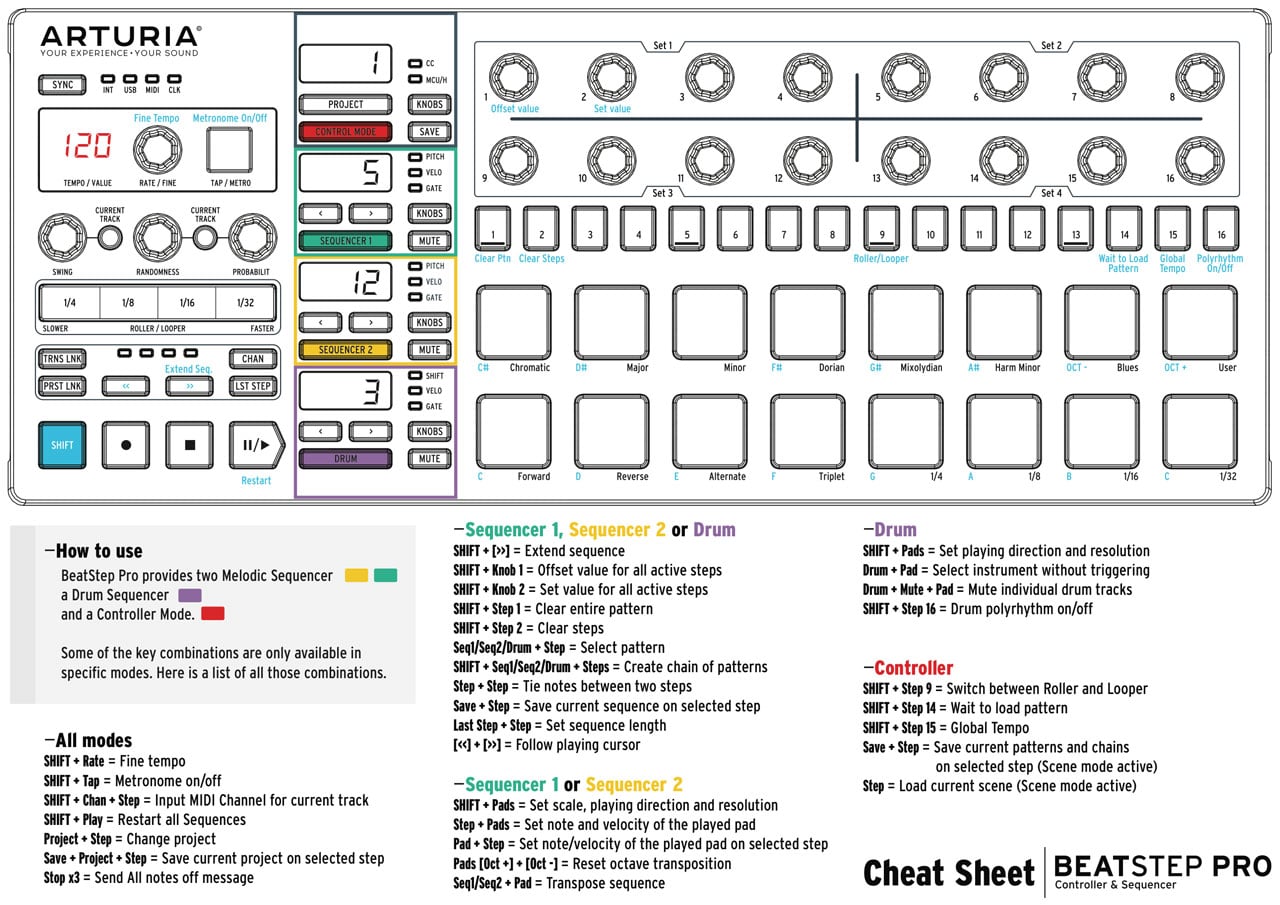
Tried to bring together all the manual references for various functions in this, especially where the SHIFT button is used. Bound to have missed something tho’ but still useful, I hope.
I was getting confused which pattern I had with which kit, so I created a sheet to record them. This is on Google Drive so you can download or copy it to keep your own record, if you so wish. The blank version matches pattern 1 with kit 1, pattern 2 with kit2 and so on, but in reality they can be all over the place, so just edit as required.
Diablo port devices driver. This now includes a separate sheet detailing the default patterns and kits.

There’s not actually many ‘cheats’ I’ve found for the System-8 yet, so this is just a list of the MIDI CCs. There were actually a few missing from Roland’s official document so I’ve added them in. I’ve also added the Jupiter-8 equivalents.
One big omission from this is the details of the Mastering options as it’s difficult to work out what they actually are (there’s actually 65 of them!) and I’ve been unable to find any info on any of Roland’s sites for these. The fact that they exist is not actually documented in the manual either. I’ve included the CC controls available in the mixer modes but not the Surface Controller mode and will probably do this as a separate document in the not too distant future.

Hopefully contains all the shortcuts up to v1.60