
Chromebook RDP – Chromebook Deployment
Chromebook RDP: Are you interested in deploying Google Chromebook™ laptops as workstations but aren’t sure about their capabilities? Are you concerned they won’t support Windows applications and desktops? If you choose the right application and desktop delivery solution, they do support all of that—and provide an intuitive, secure, high-end user experience.
How to Set Up Chrome Remote Desktop on Your Chromebook By Kenneth Butler - Social Media Editor 09 May 2019 Your Chromebook is great at many tasks, but it can't run your favorite Mac or Windows apps. The use of Microsoft RDP is non-negotiable. There is already a pre-existing Microsoft RDS deployment and utilising chrome Remote Desktop will not work with this. I know Citrix have made a Chrome extension available to handle remote desktops, so I'm hoping there's something similar for Microsoft? Install Microsoft Remote Desktop on a Chromebook Open the App Store on your Chromebook, and search for Microsoft Remote Desktop. Install the latest version of Microsoft Remote Desktop. Mar 11, 2020 The Remote Desktop client for Android and Chromebook can be used to access Windows apps and desktops directly from Google devices. This guide would be of assistance should you require to access your remote desktop from Chromebooks.
Rapidly increasing sales of Chromebook make it a good option as a thin client. However, Windows RDP offers limited features for Chromebooks. Application delivery and VDI solutions overcome the Microsoft Remote Desktop Services (RDS) limitations, allowing you to run any Windows application and desktop on Chromebooks via RDP.
However, application delivery and VDI solutions such as VMware Horizon and Citrix Virtual Apps and Desktops are expensive and demand complex configurations, almost nullifying the advantages offered by Chromebooks.
Parallels® Remote Application Server (RAS) is inexpensive and easy to deploy, configure, and maintain. It offers full support to Chromebooks, allowing organizations to provide employees with seamless user experience on Windows and Chrome applications, anytime. Combined, Parallels RAS and Chromebooks are an excellent solution for creating a cost-effective, pseudo thin–client environment.
Why Are Chromebooks Popular?
A lightweight laptop, Google Chromebook is designed to primarily run in the cloud and uses Google Chrome OS™. Most of the documents and apps live in the cloud, which means the device should always be connected to the Internet. The absence of a dedicated hard drive makes it a low-cost option.
Some of the most popular reasons for using Chromebook include:
- Low cost—it’s less expensive than a mid-range smartphone.
- Minimal configuration results in faster performance—the device loads within eight seconds.
- The device is lightweight and portable.
- It comes with a longer battery life compared to other mobile devices.
- It’s easy to use—simply open the browser and access all applications and documents in the cloud.
Chromebook RDP: Chromebook Evolution
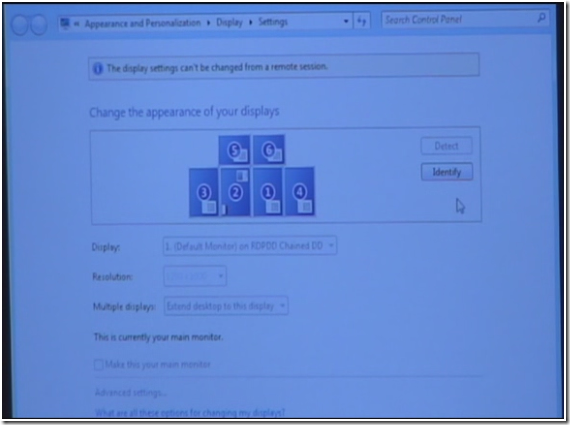
Microsoft Remote Desktop Chromebook Multiple Monitors
The remote working policies brought about by COVID-19 increased the sales of Chromebook to rise to 20.1% in 2020 from 11.4% in 2019. In comparison, the market share of Windows computers dropped to below 80% in 2020. With the rapid growth of Chromebooks,the new Apple Silicon M1 processors also got a market share of mere 0.8% on the year 2020, and saw an increase to about 7% on the first quarter of 2021. From the looks of it, Intel is certainly going to be faced with competitive pressure in the market of computers.
Looking at the numbers, it is evident that Chromebooks are here to stay. Their increased use as thin clients means administrators must explore options to connect these devices to Windows networks.
Advantages of using Chromebooks

Microsoft Remote Desktop On Chromebook
Chromebooks are ideal as thin client devices. Among the pros of using a Chromebook are:
- Cheaper than other devices: Chromebooks are generally priced lower than Windows devices, although this gap has narrowed in recent years.
- Fast and stable platform: Chromebooks run on the lightweight yet fast Chrome OS, which is based on Linux.
- Increased portability: Since Chromebooks are thinner and lighter than other devices, including Windows and Mac hardware, they are easier to carry and lug around, making them ideal for remote workers.
- Longer battery life: Chromebooks last for longer hours when operating on battery power, making it more power-efficient than other devices.
- Less prone to malware attacks: Chromebooks have a built-in trusted platform module and are continuously updated for more secure computing. They are a less popular target for cyberattacks compared to Windows.
- Cloud-based storage for better data protection: New Chromebooks now come standard with a two-year license to 100 GB of Google Drive storage. This means minimal downtime even if a Chromebook fails, since all your work is backed up online.
- Unlimited access to Android apps: While application compatibility with Windows is lacking, this is compensated for by the ability of Chromebooks to run Android applications, which already number in the millions.
Challenges with Chromebooks
While a Chromebook is ideal for use as a thin client, they can be challenging in some aspects, including the following:
- Limited offline capabilities: Most Chromebooks rely on an active Internet connection to perform their work. While some applications are addressing this issue by coming up with offline capabilities, this remains a problem for many.
- Limited storage capacities: The typical Chromebook only contains 32 GB storage, since they primarily use Google Drive for cloud storage. This may not be as problematic as before, since online applications are the trend nowadays.
- Limited application compatibility: Windows remains the primary platform for applications, and many Windows applications still do not have online versions that can work on Chromebooks. Even if an online version is available, they may not be as full-featured as their desktop counterparts. Case in point: Microsoft Office.
- Limited support for gaming, and graphics and video editing: Since Chromebooks do not have powerful graphics processors, they are not suitable for gaming and graphics and video editing work. Thus, if you are involved in this type of work, a Chromebook might not be ideal for you.
How to use RDP on Chromebook with Parallels RDP Client
You can get remote access for Windows applications and desktops on Chromebooks using the Parallels RDP Client, which is available for download from the Chrome Web Store and the Parallels® RAS website.
- Click the Launcher on the left bottom corner of your
Chromebook.
- On the Web Store, look for Parallels Client using the
Search bar on the left.
- Look for Parallels Client from the list of apps returned by
your search.
- Once you find Parallels Client, click the Install button to the right.
- To run the app, look for, then click Parallels Client from the Launcher menu.
Chromebook RDP and Parallels RAS
Efficiently deliver Windows applications hosted on hypervisors and Windows remote desktop servers to any device, anywhere. By hosting applications in the private cloud, businesses benefit from reduced administration and help desk support time and can easily control access to applications.
Parallels RAS has extensive experience supporting the education segment. Educational institutions rely on Parallels RAS to deliver Microsoft Office applications to Apple or Chrome OS, increasing the productivity of staff and students without increasing licensing costs. Parallels RAS has helped many institutions and organizations get the maximum possible benefit from the private cloud. Learn More.
References
A recent update makes Microsoft Remote Desktop friendlier for setups with built-in and on-screen keyboards on the client side of setups.
© Provided by Windows CentralWhat you need to know
- Microsoft Remote Desktop on Android recently received an update.
- The update brings support for client-side IMEs when using on-screen keyboards.
- The update also includes a couple of other improvements as well as bug fixes.
Microsoft Remote Desktop recently received an update on Android that makes it easier to use with touchscreen keyboards. The update brings the app to version 10.0.9.11.22 and also includes a couple of other improvements as well as bug fixes.
Following the update, you'll be able to use built-in and on-screen keyboards from the client-side of the Remote Desktop setup. Here's everything that's new with the update:
- Added support for client-side IMEs when using built-in and onscreen keyboards.
- Integrated credential prompting into the workspace subscription flow.
- Improved WVD workspace download performance to prevent throttling.
- Fixed instances in the UI of incorrect command icons.
With this update in place, your remote desktop setup should also prevent throttling, thanks to improvements of WVD workspace download performance in the app.
If you're new to using a remote desktop app, you can check out our guide on How to use Remote Desktop to connect to a Windows 10 PC. If you're not locked into the Microsoft ecosystem, there are also some great alternatives. Our Richard Devine recently wrote about how Chrome Remote Desktop is so good you shouldn't look at anything else.
Microsoft Remote Desktop
© Provided by Windows CentralThis app allows you to access your PC or virtualized apps from just about anywhere using your iOS or Android device.