
As of Wednesday, January 15, Microsoft will make the non-beta version of its new, Chromium-based version of the Edge browser to Windows 10 Home and Pro users. We covered the beta version of Chromium-based Edge in November. The beta was still pretty raw then—but 'raw' is a relative term. The new Edge project began with a complete and fully functional Web browser—Chromium—so it worked fine for browsing the Web. There were just a few rough edges as far as installing extensions, logging into them, and the like.
As of Wednesday, January 15, Microsoft will make the non-beta version of its new, Chromium-based version of the Edge browser to Windows 10 Home and Pro users. Microsoft gives no express warranties, guarantees, or conditions. You may have additional consumer rights or statutory guarantees under your local laws that this agreement cannot change. To the extent permitted under your local laws, microsoft excludes all implied warranties, including merchantability, fitness for a particular purpose, and non. You can test Chrome builds or Chromium builds. Chrome builds have the most infrastructure for analyzing crashes and reporting bugs. They also auto-update as new releases occur, which makes them a good choice for most uses. Chrome Canary is available for Windows and Mac and autoupdates daily.

We've seen one take waxing nostalgic for the old, purely Microsoft developed version of Edge, but we don't think many people will miss it much. It's not so much that Edge was a bad browser, per se—it just didn't serve much of a purpose. Edge didn't have the breadth of extensions or the user-base enthusiasm of Chrome or Firefox—and it was no better than they are at running crusty old 'Internet Explorer Only' websites and Web apps.
While there is some validity to worrying about one company 'controlling the Web' and one of Google's biggest competitors now becoming a Google downstream, we don't think those concerns add up to much. We don't want to see the full-on Google Chrome become any more indispensable than it already is—but we don't think Microsoft trading in its own fully proprietary, closed-source HTML-rendering engine for one of the two biggest open source rendering engines is a bad thing.
We downloaded the final beta version of Chromium-based Edge—the one available on the afternoon of the 14th, one day before the official launch—and took it for a spin in a Windows 10 virtual machine. Mostly, it still just looks like a slightly plainer version of Chrome—which isn't a bad thing! Sites load snappily, UI elements are familiar, and so forth. One of the biggest obvious improvements since the last time we test-drove Chromium Edge is the ability to install extensions from the official Chrome Web store.
AdvertisementMicrosoft's own Web store is still extremely sparse—we went looking for the must-have, EFF-developed HTTPS Everywhere, and instead we got a recommendation for 'NBC Sports'—which does not seem well-loved by its users. However, typing 'chrome Web store' in the address/search bar took us right where we needed to go and presented us with an obvious tool-tip for installing third-party extensions. That was that—HTTPS Everywhere installed with a single click, just as you'd expect it to on Chromium or Google Chrome itself.
Chromium-based Edge is still missing a couple of obvious features to compete with the full Google Chrome experience—most notably, browser history and extensions don't sync between devices yet. This is described as a temporary problem in the 'Known Issues' page, and it may even be fixed already in the production version launching today.
Microsoft Chromium Gpo
/Chrome-vs-Chromium-94e4a3896cb7455386b29982db41625f.jpg "Microsoft Chromium")
Pushing the new Edge as something to look forward to right now is difficult—we suspect most people who really care about their browser will continue using Chrome, Firefox, or whatever less-well-known variant they've found and learned to love. Meanwhile, the people who have actually been actively using Edge likely won't notice much of a change—unless Microsoft bobbles something in the user data import functionality when they push the official, non-beta version out through Windows Update later this month.
In all likelihood, the change absolutely will improve the lives of the folks who 'just click the blue E' in the long run, though. It will likely make it easier for Microsoft to lure more technical users—who demand feature and extension parity but might be interested in Edge's Azure authentication back-end—away from Google Chrome.
This article initially stated that Chromium-based Edge was being pushed over Windows Update beginning on the 15th; a Microsoft representative reached out to correct us: it was only available for download beginning on the 15th, and will not be pushed over Windows Update until later this month. The article has been updated accordingly.
Join Transform 2021 this July 12-16. Register for the AI event of the year.
Right on schedule, Microsoft today launched its new Edge browser based on Google’s Chromium open source project. You can download Chromium Edge now for Windows 7, Windows 8, Windows 10, and macOS directly from microsoft.com/edge in more than 90 languages. This is Edge 79 stable, for those who like tracking version numbers. Edge 80 is slated to arrive in early February, and afterwards Microsoft will stick to a six-week cadence for stable releases, just like with Chrome.
Microsoft has yet to lay out which features will ship in Edge 80, Edge 81, and so on. When asked what to expect from the next few Edge releases, a spokesperson said developers and users should use the beta releases as an indication. If you want to peek at the pipeline, download one of the Edge Insider Channels: Beta (updated every six weeks), Dev (updated weekly), or Canary (updated daily). Insider builds can be installed side by side with Edge stable. Update: Microsoft has published a support article that lists features in the works and requests that are not currently on the roadmap.
It’s worth noting that the new Microsoft Edge, as Microsoft is calling it, has a fresh logo. For the first time in decades, Microsoft’s browser is not denoted with a blue “e” — the logo is a wave, presumably for “surfing” the web.
Today’s debut has been a long time coming. Back in December 2018, Microsoft embraced Chromium for Edge development on the desktop. In April 2019, Microsoft released the first Chromium Edge builds (daily Canary and weekly Dev channels), and the Chromium Edge Beta channel followed in August 2019. In November 2019, Microsoft launched the Chromium Edge release candidate and positioned Edge and Bing as “the browser and search engine for business.” Microsoft today shared that the Insider builds have gotten “millions” of downloads. Now we’ll see if the stable release can get traction.
Features and performance
Microsoft plans to ship more consumer Edge features later this year, but this launch is largely targeted at businesses. That means AAD support, Internet Explorer mode, and Microsoft Search in Bing integration. Business and education IT administrators can download offline packages and policies for Chromium Edge. Many businesses already use Chrome and at least one Microsoft browser (Internet Explorer and/or Edge) — Microsoft is hoping these features will get them to switch to using just Chromium Edge.
Business features aside, there’s also support for Chrome-based extensions, 4K streaming, Dolby audio, inking in PDF, and privacy tools. For the last one, it’s worth noting that tracking prevention is on by default and offers three levels of control, like Firefox’s tracking protection.
Chrome extension support is probably the most important feature for most users. By default, extensions that have been ported over to Edge can be downloaded from the Microsoft Store. Chromium Edge also has an option to “Allow extensions from other stores” to get Chrome extensions from the Chrome Web Store.
There are still a few features missing from Chromium Edge, most notably history sync and extension sync. Microsoft is working on these and some other inking functionality that it still wants to port from legacy Edge, as Microsoft is calling it.
Microsoft also claims that Chromium Edge is twice as fast as legacy Edge. Curiously, the team isn’t making any claims against other browsers — at least not yet. In fact, our own testing shows Chromium Edge has solid performance.
The bigger picture here is that by leaning on Chromium, Microsoft no longer has to worry about “fixing” its underlying browser engine EdgeHTML. The company can instead improve Chromium itself, which helps all browsers that use the codebase, not just Chromium Edge. Microsoft says over the past year it has made more than 1,900 contributions to Chromium across areas like accessibility, touch, speech, and digital inking.
Microsoft Chromium Download
On the flip side, Edge is now just another Chromium-based browser. That makes it all the harder to offer a differentiated experience. Having failed with EdgeHTML, Microsoft figures Chromium is worth a shot.

Installing the new Edge: Manual or Automatic
Download Latest Edge Browser For Windows 10
If you’re running Windows 10 and don’t install Edge manually, you’ll eventually get it in a future update. Microsoft plans to start rolling out the new Edge “in the coming weeks,” starting with a subset of Windows Insiders in the Release Preview ring. The process will ramp up to more users “over the next several months.” It will be made gradually available on Windows Update and offered to additional devices “as data and feedback indicate that users are having a good experience.” Microsoft currently has no plans to automatically upgrade Managed, Enterprise, Education, or Workstation Pro Edition devices (documentation). If you want to block automatic delivery of the new Edge to Home and Pro devices, you can do so either via policies or the Blocker Toolkit.
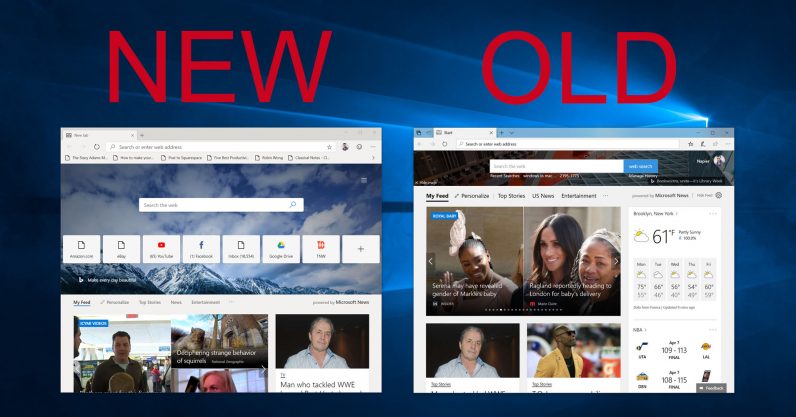
When you install the new Edge on Windows 10, it will replace legacy Edge. Any shortcuts you have on the desktop, taskbar, or Start Menu will be updated to new Edge. The executable for legacy Edge is technically hidden, but it will be removed eventually. Your favorites, passwords, form fill information, and basic settings will carry over from legacy Edge to new Edge automatically. If you have Chrome or Firefox installed, new Edge will ask if you want to import those settings from there. Web apps built on EdgeHTML and Edge preview channels will continue to work without interruption. Depending on how up-to-date your Windows 10 installation is, you may be asked to install additional updates. A future version of Windows 10 will skip all this and include new Edge by default.
When you install new Edge on Windows 7, Windows 8, and macOS, it will work just like installing any other browser. New Edge will not replace whatever you have as the default (whether that’s Internet Explorer, Safari, or a third-party browser). Yesterday, Microsoft ended support for Windows 7, so it’s notable the company is still releasing new Edge for the decade-old operating system. It shows just how big Windows 7 still is — about one in four computers run it.
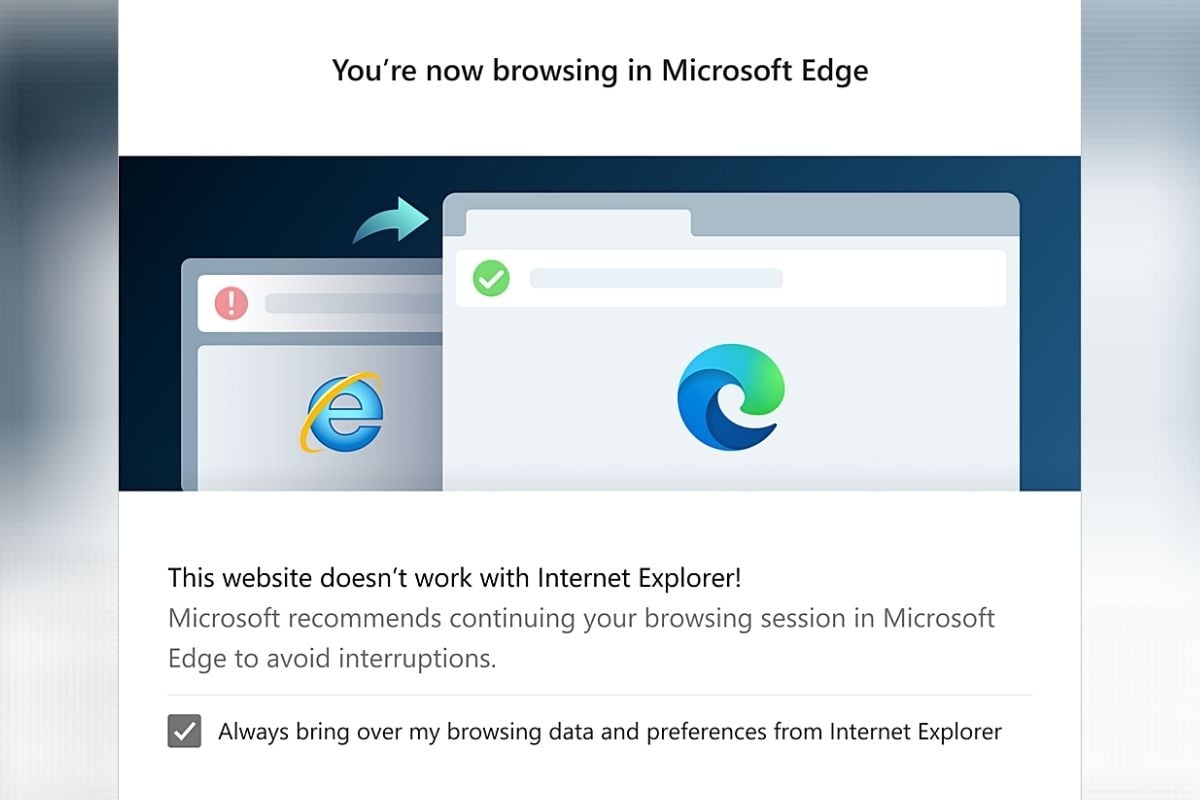
On Android and iOS, new Edge will replace old Edge automatically. That said, not much is new on mobile — Edge already uses Blink/Chromium on Android and WebKit/WKWebView on iOS. But you can expect the new logo, similar user interface to the desktop versions, and tracking prevention on iOS (coming soon to Android). More desktop features will make their way to Android and iOS over time.
Lastly, Microsoft’s FastTrack and App Assure programs cover Chromium Edge. The former means Microsoft will help you deploy Edge to your organization at no extra charge with an eligible subscription to Microsoft 365, Azure, or Dynamics 365. The latter means if your sites work in Internet Explorer 8 and above, Chrome, or legacy Edge, then they’ll work on the new Edge. If not, Microsoft will help you fix them at no additional cost.
VentureBeat
VentureBeat's mission is to be a digital town square for technical decision-makers to gain knowledge about transformative technology and transact.Our site delivers essential information on data technologies and strategies to guide you as you lead your organizations. We invite you to become a member of our community, to access:- up-to-date information on the subjects of interest to you
- our newsletters
- gated thought-leader content and discounted access to our prized events, such as Transform 2021: Learn More
- networking features, and more